Tools & Hardware Guides
Generator & Portable Power Buying Guide
How to choose generators and portable power: wattage, inverter vs conventional, fuel type, transfer switches, and safe outdoor placement.


Buying Guide
Backup power is about the watts you truly need — fridge, heat, and medical gear — not the biggest unit on the lot. Match inverter clean power for electronics, fuel storage rules, and how you will connect safely.
Top questions
- What makes a good generator?
- Inverter or open-frame?
- How many watts do you need?
- Gas, dual-fuel, or battery power stations?
- Delivery and installation
- Models worth a closer look
- How much should you spend?
- What to read next
What makes a good generator?
Dependable generators start when you need them, hold stable voltage for fridges and phones, and run at noise levels your neighbors tolerate.
Buying oversized fuel hogs wastes money; undersized units trip breakers when compressors kick on.
Budget tier ($0.00-$369.00) averages 4.47★; buyers expect Lightweight, Smart, Led.
Mid-range tier ($386.00-$1099.99) averages 4.49★; buyers expect Smart, Led, Lightweight.
Start with how you actually use the generator & portable power — daily rhythm matters more than the longest feature list on the spec sheet.
Inverter or open-frame?
Inverter generators produce cleaner power for laptops and medical devices and usually run quieter.
Open-frame conventional units deliver more watts per dollar but are louder — better for job sites than patio dinners.
When you are ready to compare models, See all 2 generators & portable power in our lineup — filter by price and the specs that matter most to you.
How many watts do you need?
List running watts plus starting surge for fridges and pumps — surge often doubles running draw for a few seconds.
Prioritize one critical circuit at a time on smaller units instead of starving everything at once.
When you are ready to compare models, See all 2 generators & portable power in our lineup — filter by price and the specs that matter most to you.
Add starting surge for fridges and pumps — surge often doubles running draw for a few seconds.
Gas, dual-fuel, or battery power stations?
Store gasoline safely and rotate fuel — stale gas kills carburetors. Dual-fuel adds propane flexibility during long outages.
Never run gas units indoors; battery power stations are indoor-safe but recharge slowly from solar or wall.
When you are ready to compare models, See all 2 generators & portable power in our lineup — filter by price and the specs that matter most to you.
Delivery and installation
Large conventional generators are heavy — plan cart or two-person move and outdoor pad placement with exhaust away from windows.
Transfer switches require licensed electrical work; cord-and-plug kits are simpler but limit what you can power.
Break in new units per manual and log oil changes — stale fuel and skipped maintenance cause most failure stories.
Top-ranked models worth considering
These are some of the top-rated, well-reviewed generator & portable power in our catalog — strong examples while you learn what to shop for. This is not our full ranked list. See all 2 generators & portable power in our lineup or see our roundup when you are ready to buy.
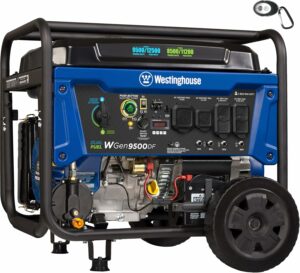
Westinghouse 12500W Dual Fuel Portable Generator
12500W dual fuel powerhouse runs on gas or propane for ultimate flexibility.
Westinghouse generators have a reputation for delivering serious power without unnecessary complexity. The WGen9500DF stands out because it refuses to be picky about fuel. You can run it on gasoline for maximum output, or switch to propane for cleaner operation and longer shelf life. That flexibility is a genuine advantage when a storm is forecast and fuel options become uncertain.
With 12,500 peak watts, this unit has the muscle to run essential home systems. Think of a central air conditioner, a well pump, and your refrigerator simultaneously. The 457cc engine is built around a cast iron sleeve for durability, and the 6.6-gallon gas tank provides up to 12 hours of runtime. The push-button electric start is a welcome convenience, especially during an emergency. Outlets include GFCI-protected household plugs for safety.
It is a heavy, substantial machine meant for stationary backup power, not tailgating. The automatic low oil shutdown protects your investment, but you’ll still need to perform regular maintenance. For a homeowner seeking reliable, dual-fuel backup power, the WGen9500DF makes a compelling case with straightforward operation and robust performance.
HomeGear editors evaluate and recommend products independently. Purchases through affiliate links may earn us a commission, which helps support our editorial work.
Brand: Westinghouse
Where to find it: Amazon
Specifications
▼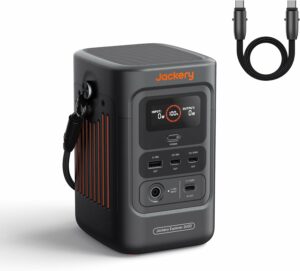
Jackery Explorer 240D 256Wh Portable Power Station
A compact 240W powerhouse that's surprisingly light for its 256Wh capacity.
Jackery’s portable power stations have become a go-to for reliable off-grid energy. The Explorer 240D stands out by using a LiFePO4 battery, a chemistry known for lasting significantly longer than standard lithium-ion. You get over 3,000 charge cycles before it degrades to 80% capacity, which translates to years of dependable use.
With 256Wh of capacity, it can recharge a smartphone over 15 times or run a mini cooler for several hours. The four-port setup is modern and practical: three USB-C ports and one USB-A. The top USB-C delivers 140W, enough to fast-charge a demanding laptop. At 200W total DC output, it handles small electronics and essential camping gear effortlessly, but it won’t power high-wattage appliances like electric kettles.
It charges from empty to full in about 1.5 hours with a compatible adapter. The compact, silent design makes it a clear upgrade over a gas generator for weekend trips or as a prepared emergency backup at home.
Brand: Jackery
Where to find it: Amazon
Specifications
▼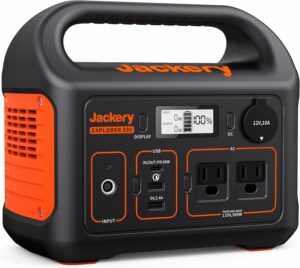
Jackery Explorer 300 Portable Power Station 293Wh
A compact, 293Wh powerhouse for charging your essential devices anywhere.
Jackery has built a reputation on making portable power accessible. The Explorer 300 is their entry point, a 293Wh power station that prioritizes simplicity and speed. It’s designed for the weekend, not the apocalypse.
At 300 watts of continuous output, it can run a small TV, charge laptops, and keep your camping fridge cool. The real win is the recharge time. Using the wall outlet and its USB-C port together, you can go from empty to 80% in about two hours. That means less time tethered to an outlet and more time using it. You can also top it up from a car outlet or, optionally, a Jackery solar panel.
It’s light enough to move around a campsite or from room to room during an outage. The 293Wh capacity is practical for charging phones and running LED lights for a weekend, but it won’t power a large appliance. For short trips and brief blackouts, it delivers reliable power without complication.
Brand: Jackery
Where to find it: Amazon
Specifications
▼
How much should you spend?
Our generator catalog centers around a ~$759 median, with useful options below and above that mark depending on features and finish.
| Price band | What you typically get | Best for |
|---|---|---|
| Under $500 | Small inverter units, limited wattage, manual cord routing | Camping and critical device charging |
| $500–$1,200 | Mid inverter or open-frame, enough for fridge plus essentials | Outage kits for most homes |
| $1,200–$2,500 | Higher watt inverters, electric start on some, RV-ready outlets | Extended outages and home office backup |
| $2,500+ | Large conventional or dual-fuel, transfer-switch ready | Whole-room backup and workshop power |
What to read next
How we review generators
We compare the details that matter in a real garage — running and surge watts, inverter vs conventional, fuel type, and transfer switch compatibility. We read owner reviews and ratings, line up specs on comparable models, and editors turn that into plain advice you can use before you buy.
We do not load-bank test every generator to verify surge watts or long-run fuel consumption in the field. When we link to specific models, those recommendations come from the same side-by-side comparison — not paid placement.
Disclaimer
HomeGear Insider publishes buying advice to help you shop smarter. We are not the manufacturer or seller of the products here. Prices, specs, and availability change — double-check the details on the retailer’s site before you order. Installation, warranty, and returns are between you and the seller.





Brutal Paid Advice — The Ice Cream Shop

WALKINGPAD R3H+ 2-in-1 Folding Treadmill 7.5 mph Review for 2026

Concept2 SkiErg SkiErg Only Review for 2026

NordicTrack T Series 10 Treadmill Review for 2026

Weber Genesis S-415 4-Burner Propane Gas Grill Review for 2026

Best Humidifiers 2026: Top 50 Tested & Ranked

20 Best Sous Vide Machines for 2026: Real Picks Worth Buying

LG 38WR85QC-W 38-Inch Curved UltraWide WQHD Monitor Review for 2026

Best Dehumidifiers 2026: Top 40 Tested & Ranked

Desk Monitor Buying Guide


-
 Home Comfort & Climate Roundups5 months ago
Best Humidifiers 2026: Top 50 Tested & Ranked
-
 Kitchen & Dining Roundups5 months ago
20 Best Sous Vide Machines for 2026: Real Picks Worth Buying
-
 Home Office Reviews5 months ago
LG 38WR85QC-W 38-Inch Curved UltraWide WQHD Monitor Review for 2026
-
 Home Comfort & Climate Roundups5 months ago
Best Dehumidifiers 2026: Top 40 Tested & Ranked
-
 Home Office Guides5 months ago
Desk Monitor Buying Guide
-

 Outdoor & Garden Roundups8 months ago
Best 40 Patio Sets: The Most-Bought Picks for 2026
-
 Cleaning & Laundry Reviews5 months ago
roborock Saros 10R Robot Vacuum and Mop with Self-Emptying Review for 2026
-

 Outdoor & Garden Guides6 months ago
Patio Set Buying Guide